What Factors Most Impact Boat Performance in 2026?

Time:2026-06-04 Author:Oliver
0%

In the evolving world of boating, understanding what affects boat performance the most has become crucial for enthusiasts and professionals alike. According to Dr. Mark Johnson, a renowned marine engineer, "Hydrodynamics and weight distribution play a pivotal role in enhancing boat efficiency." His expertise highlights the intricate balance between design and function that impacts performance significantly.

Boating technology has advanced rapidly. Lightweight materials, improved hull designs, and efficient propulsion systems have changed the landscape. Performance depends not just on the boat's physical traits but also on environmental factors. Waves, wind conditions, and even temperature can sway how a boat performs in real-world scenarios.

Nevertheless, measuring performance is not always straightforward. Some boats excel in speed, while others may prioritize stability or fuel efficiency. This diversity makes it challenging to pinpoint a single factor that dominates performance metrics. Every boat owner and designer must navigate these variables thoughtfully to maximize their vessel’s potential. Understanding these complexities is essential for anyone serious about boating in 2026 and beyond.
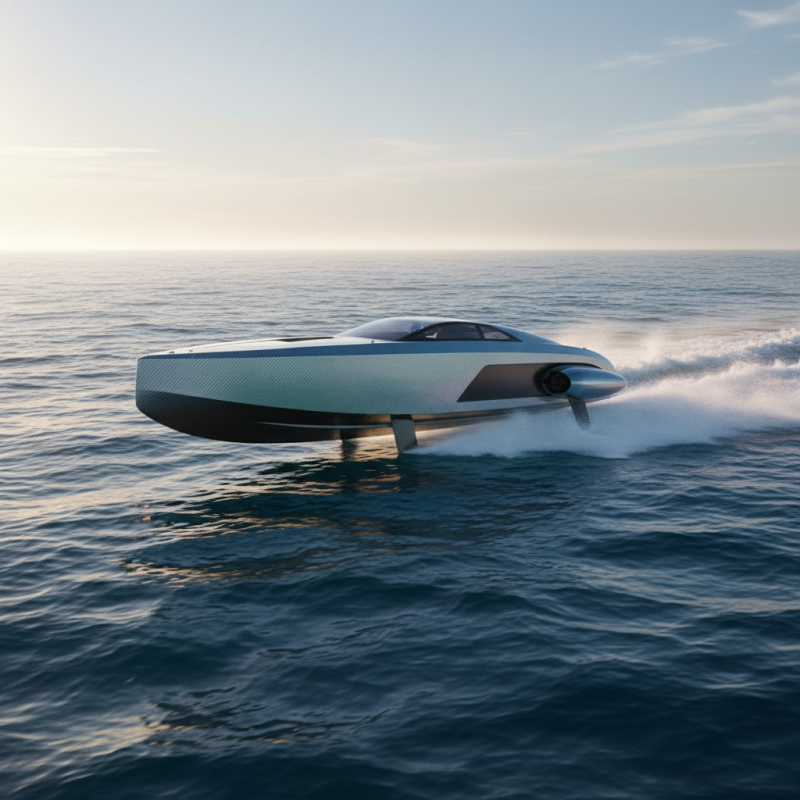
What Factors Most Impact Boat Performance in 2026?

Key Technological Advancements Influencing Boat Performance

The evolution of boat performance is greatly influenced by several technological advancements. First, lightweight composite materials are transforming hull designs. These materials increase speed while improving fuel efficiency. Boats can now glide more easily over water, providing both agility and stability.

Electric propulsion systems are also reshaping the boating industry. These systems offer quiet operation and reduced emissions. However, they often face challenges such as limited range and charging infrastructure. The need for longer battery life remains a substantial hurdle for manufacturers.

Automation technology enhances navigation and control. Advanced GPS systems and autopilot features can ease the burden on captains. Yet, over-reliance on these technologies may lead to skill degradation among operators. Understanding the balance between innovation and traditional skills is essential for future boating safety.

Impact of Hull Design on Speed and Stability in 2026

Hull design plays a crucial role in boat performance. In 2026, advancements in technology highlight this more than ever. Designers focus on shape and material. A streamlined hull can reduce drag. This is essential for speed and fuel efficiency. However, some designs sacrifice stability for speed. This trade-off can lead to unsafe conditions in rough waters.

The balance between speed and stability is a persistent challenge. A wider hull might offer better stability, but it can also decrease speed efficiency. This makes it harder for boaters who desire both qualities. Many designs tested today face scrutiny for their performance. Will they hold up in various conditions? Or will they struggle and require adjustments?

Sustainability is also influencing hull design. Eco-friendly materials are evolving but may not always perform like traditional options. Therefore, the best design is not always the most straightforward one. Designers must think critically about compromises. Each choice impacts overall performance. Testing features and collecting feedback remains essential for progress.

Environmental Regulations and Their Effects on Boat Performance

In 2026, environmental regulations are reshaping the boating industry significantly. Authorities are focusing on reducing emissions and improving energy efficiency. This shift requires boat manufacturers to innovate, often leading to complex engineering challenges. For instance, adapting engines to meet stringent exhaust standards can compromise performance. Designers must balance power and environmental impact.

Sustainable materials are becoming more common in boat construction. However, these materials might not always offer the same performance as traditional options. This transition can lead to trade-offs, such as reduced durability or increased costs. The result? Boaters often find themselves wondering about the long-term benefits versus immediate performance needs.

The cost of compliance poses another serious challenge. Some smaller manufacturers struggle with the financial burden of meeting new standards. This can inadvertently limit choices for boaters. Each decision involves careful consideration of both performance and sustainability. The industry's future hinges on finding that balance, which is no easy feat.

Role of Engine Efficiency and Fuel Type in 2026

As we look ahead to 2026, the efficiency of boat engines and the types of fuel used will play a critical role in performance. Recent reports indicate that engine efficiency can boost fuel economy by up to 30%. This significant gain can reduce operational costs and environmental impact simultaneously. Modern designs focus on maximizing energy conversion. Innovative propulsion systems are emerging, yet many remain unaware of their potential.

The choice of fuel is equally impactful. Advances in alternative fuels, such as biofuels and hybrids, have shown promising results. Data shows that boats using these fuels can achieve emission reductions of over 50% compared to traditional gasoline engines. However, the infrastructure for these fuels still lacks widespread availability. This inconsistency in fueling options could hinder the immediate adoption of cleaner technologies.

Broadly, boat performance in 2026 pivots on the balance between fuel type and engine efficiency. Boat manufacturers are under pressure to innovate, creating power sources that are not just efficient but also environmentally responsible. While significant progress has been made, challenges remain. Achieving a fully sustainable boating industry is still a work in progress, revealing avenues for further research and development.

Impact of Engine Efficiency and Fuel Type on Boat Performance in 2026

This chart illustrates the relationship between different engine efficiency ratings and various fuel types, showcasing their impact on boat performance metrics like speed, fuel economy, and emissions in 2026.

Water Conditions and Their Influence on Boat Handling and Speed

Water conditions significantly affect boat performance. Factors such as wave height, current speed, and water temperature play crucial roles in handling and speed. A report from the Marine Research Institute indicates that wave height can reduce speed by up to 30%. Boats struggle to maintain stability in choppy waters, leading to increased resistance.

In calm water, boats can achieve optimal speeds. The same report shows that smooth surfaces allow for better hydrodynamics. This enhances maneuverability and responsiveness. However, during heavy rains, water temperature drops, affecting engine efficiency. Cold water can lead to decreased performance, prolonging acceleration and reducing overall handling.

Understanding these factors can guide boaters in selecting favorable conditions for performance. The variability of water conditions poses challenges. Adaptation and careful planning are essential for maximizing performance. Continuous research is necessary to improve our understanding of these dynamics in 2026 and beyond.

What Factors Most Impact Boat Performance in 2026?

Water Condition Impact on Speed (knots) Impact on Handling Optimal Conditions
Calm Water Max Speed +5 Excellent Wind < 5 mph
Choppy Water Max Speed +2 Moderate Wind 5-15 mph
Rough Water Max Speed -3 Poor Wind > 15 mph
Tidal Conditions Varies +/-3 Variable Slack Tide
Current Speed Varies +/-4 Challenging Gentle Current

FAQS

: How does engine efficiency impact boat performance?

: Engine efficiency can boost fuel economy by up to 30%. This reduces operational costs and environmental impact.

What types of fuel are becoming more popular for boats?

Alternative fuels, like biofuels and hybrids, are gaining traction. They can cut emissions by over 50% compared to traditional fuels.

What challenges do alternative fuels face?

The infrastructure for alternative fuels is not widely available. This limits the adoption of cleaner technologies in boating.

How do water conditions affect a boat's speed?

Factors like wave height and current speed directly influence speed. Waves can reduce a boat's speed by up to 30%.

What is the impact of calm water on boat performance?

Calm water allows boats to achieve optimal speeds. Smooth surfaces improve hydrodynamics and enhance maneuverability.

How does water temperature impact engine efficiency?

Cold water can decrease engine efficiency. It prolongs acceleration and affects overall handling during heavy rains.

Why is understanding water conditions important for boaters?

Knowing water conditions helps select the best times for boating. This knowledge is crucial for optimizing performance.

What are manufacturers pressured to do in the boating industry?

Manufacturers must innovate for efficient and environmentally responsible power sources. Progress is being made, but challenges remain.

What does the future hold for the boating industry by 2026?

The future relies on balancing fuel types and engine efficiency. Sustainable solutions are still developing.

What areas need more research in boating performance?

Continuous research is needed to understand water dynamics better. This knowledge will aid in improving performance in various conditions.

Conclusion

In 2026, several key factors significantly influence boat performance, making it essential to understand what affects boat performance the most. Technological advancements, including innovations in materials and systems, enhance overall efficiency and speed. Additionally, hull design plays a crucial role, as streamlined shapes improve both speed and stability on the water, directly impacting performance.

Environmental regulations also contribute to the evolution of boat performance, necessitating compliance that can affect design choices and operational capabilities. Engine efficiency and the choice of fuel are critical in optimizing power output while minimizing ecological impact. Finally, water conditions, such as waves and currents, can greatly influence handling and speed, highlighting the importance of adaptive design and engineering in achieving optimal boat performance in varying environments.

Oliver

Oliver

Oliver is a seasoned marketing professional with a wealth of expertise in driving brand awareness and engagement. With a deep understanding of our company's product offerings, he consistently delivers high-quality content that enriches our professional blog. His insights not only shed light on......