Choosing a boat is exciting, but the wrong choice can turn weekends into expensive maintenance projects. The best boat is not always the largest, fastest, or newest model. It should match your experience, local water, crew, storage, and realistic budget.
Many buyers begin with appearance. That is understandable. A polished hull and comfortable cabin create an immediate emotional pull. Yet a boat that looks perfect at the dock may feel unstable, cramped, or difficult to handle on open water. If you are asking, “How to choose the right boat for me,” begin with honest questions about how you will actually use it. Will you fish before sunrise, carry children, cruise overnight, or launch it only a few times each season?
This guide presents seven practical tips for making that decision with greater confidence. It considers boat type, size, engine choice, operating costs, safety equipment, storage, and sea trials. A marine surveyor, experienced dealer, or qualified instructor can also provide valuable independent advice. Their guidance matters, especially when inspecting a used boat with hidden moisture, worn wiring, or neglected systems.
Small details matter.
Measure the trailer space. Sit at the helm. Imagine a wet, windy afternoon. A careful trial can reveal more than attractive photographs ever will. Still, no buying method is perfect. Personal preferences change, and some costs are easy to underestimate. Reviewing your decision after each inspection can prevent enthusiasm from replacing sound judgment. With patience and reliable information, you can choose a boat that feels practical, safe, and enjoyable for years.
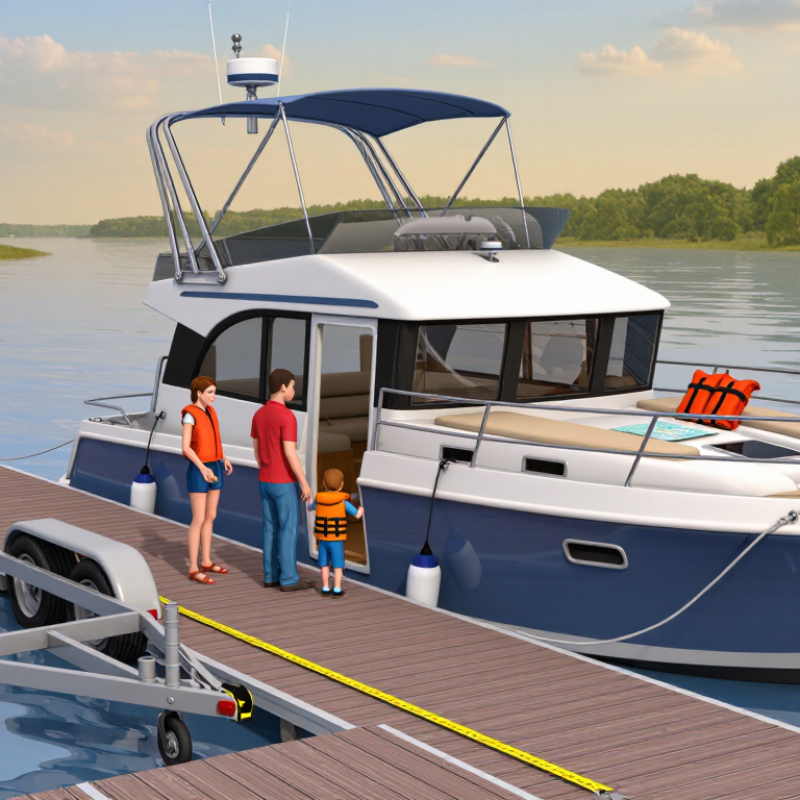
Define Your Boating Purpose and Preferred Activities
7 Tips on How to Choose the Right Boat for You?
Define Your Boating Purpose and Preferred Activities
Start by naming the moments you want from a boat. Quiet fishing at dawn needs different features than weekend family cruising. A fishing boat may require open deck space, stable footing, rod storage, and easy access to coolers. A family cruiser may need shade, seating, a boarding ladder, and protected storage.
Think about your usual water conditions, too. A narrow lake, tidal river, and exposed coastal area place different demands on hull design and engine power. Check the boat’s draft against your launch area. A deep hull can ride comfortably, but it may limit access to shallow coves. That detail is easy to miss.
Picture a normal outing, not a perfect one. Who comes along? How much equipment do you carry? Can everyone move safely when the water becomes choppy? Walk through the boat with those questions in mind. Open every locker. Sit in each seat. Measure the space for life jackets, fuel containers, and cleaning tools.
A short water trial can reveal uncomfortable seating, poor visibility, or difficult handling. Ask about maintenance schedules, safety equipment, and capacity ratings. Reliable advice should include limitations, not only attractive features.
I once underestimated storage space on a small boat. The first outing felt crowded. That mistake changed how I compare layouts now. You may also discover that your favorite activity changes after a season. Leave room for that possibility.
Match Boat Types to Your Experience and Intended Use
7 Tips on How to Choose the Right Boat for You?
Match Boat Types to Your Experience and Intended Use
Your experience should guide the hull, controls, and engine power you choose. A stable bowrider suits beginners seeking short lake trips and easy boarding. A small center-console boat offers better control for fishing and coastal day use. Kayaks or compact sailboats can build confidence before you manage larger vessels. Start with the water you know. Wind can change quickly.
Think about your real routine, not an imagined one. Will you carry two friends, fishing gear, or children wearing life jackets? Measure the storage space at home and check the trailer weight against your vehicle’s capacity. A cabin boat supports overnight trips, but it demands more cleaning and maintenance. A lightweight aluminum boat is easier to launch by hand. That convenience matters every weekend.
Inspect the layout before buying. Sit at the helm, reach the controls, and check visibility while standing. Ask a qualified marine technician to examine the hull, steering, fuel system, and electrical connections. Confirm the boat’s capacity plate and match it to your planned passengers and equipment. Take a supervised test drive in calm water, then practice docking. I once underestimated docking space, and the lesson stayed with me. Bigger is not always better. Choose equipment you can control confidently, maintain regularly, and store safely. Pay for training when the boat introduces unfamiliar systems. Your first choice may not be perfect, and that is worth admitting. A practical fit usually beats an impressive specification sheet.
Evaluate Size, Capacity, Performance, and Comfort
7 Tips on How to Choose the Right Boat for You?
Evaluate Size, Capacity, Performance, and Comfort
Choosing a boat begins with honest measurements, not glossy pictures. I measure the usual crew, weekend gear, and storage space before visiting a dealer. A 16-foot boat may feel nimble, but four adults can quickly make it crowded. Check the capacity plate, then leave sensible room for coolers, fuel, and safety equipment. Capacity is not a target to fill.
Size should match the water you use. On narrow rivers, a smaller hull turns more easily and costs less to handle. On open water, extra length and beam can improve stability, yet they may demand stronger towing equipment. I also inspect draft, doorway clearance, and trailer weight. These details sound dull. They prevent expensive surprises.
Performance depends on the engine setup, hull shape, and expected load. Ask for a sea trial with similar passengers aboard. Watch how quickly the boat planes, how it behaves in turns, and whether steering feels tiring. A powerful engine is not automatically the best choice. It can raise fuel use and make low-speed control awkward. I once judged a boat too quickly from a calm test ride; choppy water might have changed my opinion. Comfort is practical, not decorative. Sit at the helm for twenty minutes. Can you see over the bow? Check supportive seats, grab points, ventilation, shade, boarding steps, and dry storage. Noise matters too. A comfortable boat lets people talk without shouting, though expectations differ between fishing, cruising, and family outings.
Calculate Purchase, Operating, Storage, and Maintenance Costs
7 Tips on How to Choose the Right Boat for You?
Calculate Purchase, Operating, Storage, and Maintenance Costs
A boat’s purchase price is only the starting point. Set a total budget before visiting dealers or private sellers. Include the hull, engine, safety equipment, trailer, registration, insurance, and a professional inspection. An older boat may look affordable, but worn wiring or a neglected engine can quickly change the calculation.
Ask for service records and engine-hour information. Then request written estimates from a qualified marine technician. Estimate fuel use from your planned trips, not optimistic sales figures. Add launch fees, mooring, winter storage, cleaning, and routine servicing. Storage alone may cost more than expected in busy coastal areas. Compare indoor, outdoor, and home storage options where permitted. Keep receipts in a simple spreadsheet. It makes hidden patterns easier to see.
Leave room for surprises. A practical reserve of 10% to 20% can protect your budget, although difficult repairs may exceed it. Think about how often you will use the boat. Paying for premium equipment makes little sense if the boat stays unused for months. I once underestimated small recurring costs, such as fuel filters, lines, and battery care. That mistake changed the real annual price. Calculate monthly ownership costs and compare them with a realistic rental alternative. The cheapest boat to buy is not always the cheapest boat to own.
7 Tips on How to Choose the Right Boat for You? - Calculate Purchase, Operating, Storage, and Maintenance Costs
Illustrative cost comparison for commonly purchased recreational boats in the United States. All amounts are estimated in USD.
| Tip |
Boat Type and Typical Size |
Best For |
Typical Purchase Price
(New) |
Typical Annual Operating Cost* |
Annual Storage Cost |
Annual Maintenance Cost |
Estimated 5-Year Ownership Cost** |
Practical Buying Consideration |
| 1Match the boat to your main activity |
Aluminum Fishing Boat
16–18 ft |
Freshwater fishing, small-group cruising, and easy trailering |
$15,000–$35,000 |
$1,200–$3,000 |
$600–$1,800 |
$500–$1,200 |
$26,500–$65,000 |
Choose a layout with enough casting space, livewell capacity, and trailer weight suitable for your vehicle. |
| 2Estimate the number of passengers |
Bowrider
19–21 ft |
Day trips, swimming, watersports, and family recreation |
$35,000–$75,000 |
$2,500–$5,500 |
$1,000–$3,000 |
$1,000–$2,500 |
$57,500–$130,000 |
Check the certified passenger capacity, cockpit seating, shade coverage, and available storage before buying. |
| 3Check fuel use and cruising range |
Center-Console Boat
20–23 ft |
Coastal fishing, offshore day trips, and versatile family use |
$45,000–$100,000 |
$4,000–$8,500 |
$1,500–$4,500 |
$1,500–$3,500 |
$80,000–$182,500 |
Compare fuel-tank capacity, expected cruising speed, hull design, and the cost of a suitable tow vehicle. |
| 4Consider comfort and weather protection |
Deck Boat
21–24 ft |
Large groups, calm-water cruising, swimming, and entertaining |
$50,000–$110,000 |
$3,500–$7,500 |
$1,500–$4,000 |
$1,500–$3,500 |
$82,500–$185,000 |
Prioritize seating layout, boarding access, bimini coverage, ventilation, and drainage around the deck. |
| 5Compare trailering with marina storage |
Pontoon Boat
22–25 ft |
Inland lakes, relaxed cruising, fishing, and social gatherings |
$35,000–$90,000 |
$2,500–$6,000 |
$1,200–$3,600 |
$1,200–$3,000 |
$59,500–$153,000 |
Confirm slip width, trailer dimensions, pontoon lifting capacity, and whether your launch ramp can handle the boat. |
| 6Budget for overnight capability |
Cuddy Cabin
24–28 ft |
Weekend trips, coastal cruising, and occasional overnight stays |
$80,000–$180,000 |
$5,000–$11,000 |
$3,000–$8,000 |
$2,500–$6,000 |
$132,500–$305,000 |
Inspect the cabin, marine toilet system, freshwater system, ventilation, electrical equipment, and berth dimensions. |
| 7Plan for long-term ownership costs |
Express Cruiser
30–35 ft |
Extended cruising, multiple-day trips, and onboard accommodation |
$180,000–$450,000 |
$10,000–$25,000 |
$6,000–$18,000 |
$7,000–$20,000 |
$295,000–$765,000 |
Obtain quotes for marina fees, haul-outs, insurance, winterization, generator service, and major-system repairs. |
* Annual operating cost includes estimated fuel, insurance, registration, routine consumables, and launching or marina-use fees. It excludes storage and maintenance, which are shown separately. Estimates assume approximately 50–150 engine hours per year, depending on boat type.
** Estimated 5-year ownership cost equals the purchase price plus five years of operating, storage, and maintenance expenses. Taxes, financing interest, depreciation, major accident repairs, and resale value are excluded. Actual costs vary by location, usage, engine type, storage method, and condition.
Inspect, Compare, and Test Boats Before Making Your Choice
7 Tips on How to Choose the Right Boat for You?
Inspect, Compare, and Test Boats Before Making Your Choice
A suitable boat begins with your real habits, not a glossy specification sheet. Define where you will sail, how many people will join, and how often you can maintain it. List your priorities. Fishing space, sleeping areas, fuel range, and trailer weight may compete. The National Marine Manufacturers Association’s 2023 Statistical Abstract reported about 11.6 million registered recreational boats in the United States. That scale offers choice, but it also makes comparison essential.
Inspect the hull in daylight for cracks, repairs, blistering, and uneven coloring. Open lockers and check for moisture, corrosion, damaged wiring, and soft flooring. Examine the engine service records, hours, fuel system, steering, and bilge pump. The U.S. Coast Guard recorded 3,844 recreational boating accidents and 564 deaths in 2023. Safety equipment deserves direct attention, not assumptions. Check life jackets, fire extinguishers, navigation lights, ventilation, and emergency communication gear. A clean cabin can still hide expensive problems.
Compare the full ownership cost, including storage, insurance, repairs, fuel, and winterization. Then arrange a sea trial in conditions close to your normal use. Test starting, acceleration, steering, docking visibility, noise, vibration, and stability. Watch how quickly water leaves the bilge. Ask every passenger to move safely around the deck. A qualified marine surveyor can spot structural or electrical defects that buyers miss. I would leave room for doubt; excitement can make a small defect look harmless. A boat should feel manageable, not merely impressive.
7 Tips on How to Choose the Right Boat for You
Inspect, compare, and test boats before making your choice.
This comparison uses representative specifications for common recreational boat types. Start by matching the boat’s length and passenger capacity to your normal crew and waterways. Then inspect the hull, deck, engine, electrical systems, safety equipment, and maintenance records. Finally, compare running costs and complete a supervised sea trial to evaluate handling, stability, visibility, noise, and comfort.
FAQS
A stable bowrider can suit short lake trips and easy boarding. Kayaks or compact sailboats may build confidence gradually. Start small. Wind can change quickly, so basic training still matters.
Think about real trips, not imagined adventures. Count passengers, children, fishing gear, coolers, and safety equipment. A center-console layout may suit fishing and coastal day use. My imagined guest list was once too optimistic.
Measure your usual crew and available storage space. A 16-foot boat may feel nimble with two people. Four adults can make it crowded quickly. Capacity is not a target to fill.
Ask a qualified marine technician to inspect the hull, steering, fuel system, and electrical connections. Review service records and engine-hour information. Check for worn wiring, neglected maintenance, and hidden damage. Pictures rarely tell the whole story.
Check trailer weight against your vehicle’s approved capacity. Measure home storage space, doorways, and launch access. A lightweight aluminum boat may be easier to launch by hand. Small measurements prevent expensive surprises.
Arrange a supervised test drive with similar passengers aboard. Watch how quickly the boat planes and behaves during turns. Test steering effort in calm water, then consider rougher conditions. One calm ride can mislead you.
Sit at the helm for twenty minutes. Check visibility, supportive seats, grab points, shade, ventilation, and boarding steps. Look for dry storage and reasonable cabin noise. Can people talk without shouting?
Include the boat, engine, trailer, safety equipment, registration, insurance, and inspection. Add fuel, launch fees, storage, cleaning, and routine servicing. Keep receipts in a simple spreadsheet. Small costs become surprisingly loud.
Not automatically. Engine power should match the hull, load, and intended water conditions. Excess power can increase fuel use and make slow-speed control awkward. Choose control and reliability over an impressive specification sheet.
A reserve of 10% to 20% may help with ordinary surprises. Difficult repairs can still exceed that amount. Compare monthly ownership costs with realistic rental alternatives. The cheapest purchase is not always the cheapest ownership choice.
Conclusion
Choosing the right boat starts with understanding your boating purpose and the activities you plan to enjoy, such as fishing, cruising, watersports, or weekend trips. Ask yourself, “How to choose the right boat for me?” Then consider your experience level and select a boat type that matches your skills, intended waters, and frequency of use. A beginner may benefit from a simple, easy-to-handle design, while experienced boaters may prefer greater performance or specialized features.
Next, evaluate the boat’s size, passenger capacity, handling, speed, fuel efficiency, storage space, and comfort. Create a realistic budget that includes not only the purchase price but also insurance, fuel, maintenance, registration, equipment, and storage. Before making a final decision, inspect several boats carefully, compare their features and condition, and arrange a practical test whenever possible. This process will help you choose a safe, comfortable, reliable boat that fits both your lifestyle and long-term budget.

 Green Boat