The global boat anchor market is currently experiencing a transformative phase, driven by the expansion of the maritime trade industry and a surge in recreational boating activities worldwide. As a critical component of vessel safety, the demand for high-performance anchoring systems has evolved from simple iron weights to technologically advanced, aerodynamically optimized structures. Today, the industry is valued at billions of dollars, with manufacturers focusing on material science—specifically high-tensile stainless steel and hot-dipped galvanized alloys—to combat the corrosive nature of saline environments.
Industrial Insight: Modern anchoring is no longer just about weight; it is about "holding power to weight ratio." The shift toward AISI 316 Stainless Steel and high-grade aluminum alloys has allowed for lighter anchors with superior seabed penetration, reducing vessel fuel consumption and increasing overall efficiency.
From the bustling shipyards of Southeast Asia to the luxury marinas of the Mediterranean, the supply chain for boat anchors is truly global. The "Top 10 Manufacturers" represent a mix of traditional European craftsmanship and the high-output, technologically advanced factories of China. Major exporters are now focusing on certifications like ABS (American Bureau of Shipping) and Lloyd’s Register to meet the rigorous safety standards required by international shipping laws.
Integration of IoT sensors to monitor tension and seabed grip in real-time, providing digital feedback to bridge systems.
Focus on "Low-Impact" anchors that minimize damage to sensitive coral reefs and seagrass beds during deployment.
Utilization of advanced anti-corrosion coatings that extend the lifespan of marine hardware by up to 200%.
The industry is moving toward automated manufacturing processes. Robotics and AI-driven quality control ensure that every weld and setiap forging meets the microscopic tolerances required for deep-sea applications. Furthermore, the trend of "Lightweighting" is dominating the yachting sector, where owners demand anchors that are easy to handle but provide the security of a permanent mooring.
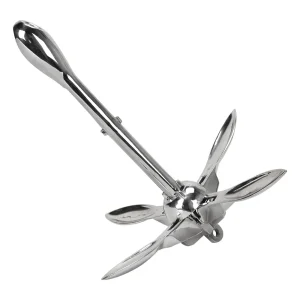
Understanding the seabed is key. In the rocky fjords of Norway, heavy-duty Grapnel anchors are preferred. Contrastingly, in the sandy shallows of the Caribbean, Fluke or Danforth anchors provide the best "burying" capability. For arctic conditions, manufacturers are now developing specialized low-temperature resistant alloys that don't become brittle in sub-zero waters.

Building a great boat comes down to three core fundamentals: Time-honoured design, premium materials, and construction standardisation.
Value redefined: Our value goes beyond that of just a great product for a great price.
Our facility leverages massive economies of scale, providing premium marine hardware at competitive factory-direct pricing.
With in-house CNC machining and advanced casting, we offer full OEM/ODM services for bespoke yachting requirements.
Located near major shipping hubs, we ensure rapid global delivery and seamless customs processing for large-scale orders.
As a leading Chinese manufacturer, we bridge the gap between high-tech industrial production and global safety compliance. Our anchors undergo rigorous stress testing, including tensile strength verification and salt-spray corrosion tests, ensuring that they perform under the most extreme maritime conditions. By choosing a factory-direct partnership, global buyers eliminate middlemen markups and gain direct access to engineering support.
In the vast landscape of maritime engineering, the anchor remains the ultimate insurance policy for any vessel. Whether it's a 100-foot superyacht or a compact rescue boat, the physics of anchoring involves complex interactions between gravity, tension, and seabed geophysics. The "Top 10 Boat Anchor Manufacturers & Exporters" have mastered this through decades of research and development.
The market is dominated by several key designs, each serving a specific industrial purpose:
Quality control in anchor manufacturing is a life-and-death matter. High-end exporters utilize Finite Element Analysis (FEA) to simulate extreme weather conditions on anchor prototypes before they ever hit the production line. This AI-integrated design process allows for the removal of unnecessary weight while reinforcing high-stress points.
Note for Global Buyers: When sourcing from China, always look for factories that provide Mill Test Certificates (MTC). This ensures the material composition matches the structural requirements for marine safety. Our factory provides full traceability for every batch of stainless steel and aluminum used.
The shift towards more efficient anchor designs has a direct economic benefit. Lightweight, high-holding anchors allow vessels to carry less dead weight, translating to better fuel economy. In the commercial sector, where margins are thin, the right anchoring hardware can save thousands of dollars in annual fuel costs and maintenance.
We are entering an era of "Smart Anchoring." Future trends point toward anchors equipped with ultrasonic sensors that can detect the type of seabed before deployment. This data, combined with AI weather forecasting, allows the vessel's computer to calculate the exact amount of scope needed for a safe hold. As a forward-thinking factory, we are already investigating the integration of smart-compatible hardware into our upcoming product lines.
 Green Boat