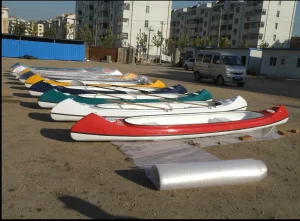
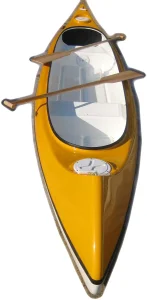
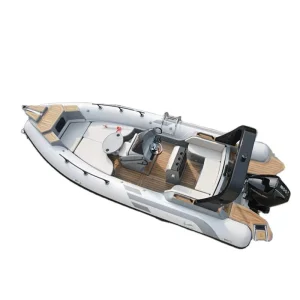
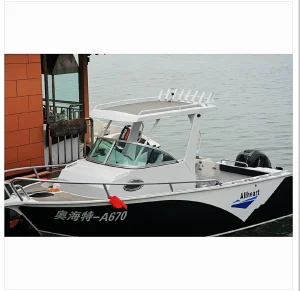
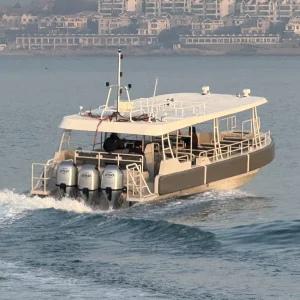
Our globally trusted marine hull solutions, professional sports craft, and propulsion components optimized for offshore integration.
The vital interface of RF engineering in safeguarding and connecting assets across global waterways.
Whether navigating open oceans on a luxury commercial yacht, operating rescue missions in severe weather on an aluminum patrol craft, or tracking aquaculture fleets, robust marine communications are paramount. Antenna systems serve as the cornerstone of this infrastructure, translating critical RF telemetry into actionable navigational data.
The ocean environment is unforgiving to RF signals. High path loss, multipath fading caused by reflections off water surfaces, tropospheric ducting, and structural attenuation challenge signal integrity. Marine antenna solutions must be specifically engineered to address these atmospheric obstacles through strict impedance matching and optimized vertical beamwidths.
As a leading Chinese marine electronics manufacturer and exporter, our engineering facilities focus on custom RF design, manufacturing standardization, and strict compliance with global maritime standards including IEC 60945, FCC, and CE. We bridge the gap between premium design and mass-production efficiency.
Proof is in the performance. Building a great boat or communication accessory comes down to three core fundamentals: Time-honoured design, premium materials, and construction standardisation.
Value redefined. Our value goes beyond that of just a great product for a great price. We integrate global maritime manufacturing ecosystems to supply state-of-the-art marine platforms and components that exceed standard lifetimes in saltwater environments.
By bringing together the resources of the global marketplace in renowned German hull designers Klaus Filter, Graeme King, the Flying Eagle Boat Company, and a group of business, engineering, and rowing talents in the USA, WinTech Racing has created an organization dedicated to:

We’ll happily come to you if you’d like to run a marine system trial, provide you with flexible finance and leasing options, and offer comprehensive aftercare and technical maintenance services to maximize the operational lifespan and performance of your boats and communications equipment for now and for the future.
Developing high-performance marine communication hardware capable of running in extreme offshore environments.
To resist UV degradation and corrosive sea spray, our boat antennas utilize military-grade heavy-wall fiberglass radomes. Internally, pure copper and brass radiator elements ensure maximum transmission gain, high efficiency, and low VSWR across the entire band.
Commercial ships require simultaneous operation of AIS (Class A/B) and marine VHF. Our dual-band maritime diplexer systems and tailored helical array elements allow zero-noise co-existence, guaranteeing that critical positioning data is broadcast without disruption.
Powerboats, high-speed passenger ferries, and rigid inflatable boats (RIBs) suffer heavy mechanical slamming. Our antennas undergo extensive vertical/horizontal vibration swept tests and feature reinforced brass ferrules to maintain structural integrity.
| Antenna Type | Frequency Range | Gain (dBi) | VSWR | Polarization | Housing Material |
|---|---|---|---|---|---|
| Classic VHF Marine Whip | 156 - 163 MHz | 3.0 / 6.0 dBi | ≤ 1.3:1 | Vertical | Heavy-duty Fiberglass |
| AIS Dedicated Antenna | 161.975 - 162.025 MHz | 4.5 dBi | ≤ 1.2:1 | Vertical | UV-Resistant Polyurethane |
| Marine GNSS & LTE Multi-band | 698-960 / 1710-2700 / 1575 MHz | 5.0 dBi | ≤ 1.8:1 | Omni-directional | High-impact ABS / SUS316 |
| VSAT Marine Satellite Dome | Ku-Band (12-18 GHz) | 39.5 dBi | ≤ 1.4:1 | Circular (RHCP/LHCP) | FRP Composite Radome |

In the offshore and inland navigation markets, communication hardware must integrate seamlessly with boat hull designs. Our partnership with international research institutes ensures that our marine antennas offer optimized aerodynamic profiles, reducing wind drag on high-speed passenger ferries and racing shells.
Whether dealing with custom yachts or commercial patrol boats, our hardware is designed with corrosion prevention (galvanic isolation) in mind. Standard chrome-plated brass or marine-grade electropolished 316 stainless steel mounts are incorporated into every setup.
By implementing structural optimization at the CAD design phase, our marine products achieve long-term survival in high salinity, extreme temperature swings (-40°C to +85°C), and harsh weather conditions.
View Commercial ApplicationsUnderstanding regional regulations, frequency allocations, and marine scenarios.
US and Canadian waterways require strict compliance with FCC Part 80 guidelines. Marine VHF radios and antennas must match designated simplex and duplex channel groupings, particularly for regional Coast Guard watchstanders and automated weather warning channels (WX1-WX7).
European Union operations demand conformity under the Radio Equipment Directive (RED) and Marine Equipment Directive (MED). Our structural manufacturing process complies with EN 60945 standards, validating electromagnetic compatibility (EMC) and extreme environmental tolerance.
With heavy fishing activity in coastal Turkey, Southeast Asia, and Pacific aquaculture zones, cost-efficient, high-performance communication systems are vital. Our antennas are designed for simple installation and operation on small utility craft and artisanal fishing vessels.
Leading the development of next-generation marine communication infrastructure.
1. Low Earth Orbit (LEO) Integration: The emergence of LEO satellite networks (e.g., Starlink, OneWeb) has transformed marine connectivity. We are developing flat-panel electronically scanned array (ESA) antennas to replace heavy, mechanical tracking domes, offering low-latency, high-bandwidth connections even on smaller boats.
2. 5G NTN (Non-Terrestrial Networks): Incorporating 3GPP Release 17 standards allows marine antennas to switch smoothly between terrestrial cellular towers and direct-to-cell satellite networks. This ensures continuous, cost-effective coverage from inland waterways to deep-sea routes.
3. Smart Beamforming Arrays: Utilizing active phased-array systems, next-generation smart marine antennas will shape their radiation patterns dynamically, compensating for a vessel's pitch and roll in rough seas to maintain a stable, high-efficiency connection.
Expert technical insights regarding installation, testing, and operations.
Durable, high-quality marine accessories designed to support crew operations in commercial and industrial settings.
 Green Boat