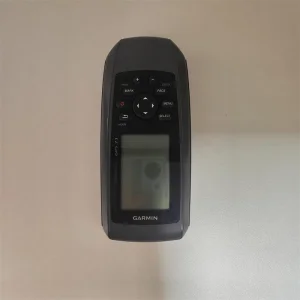
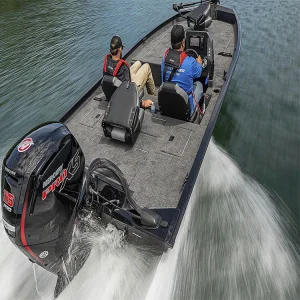
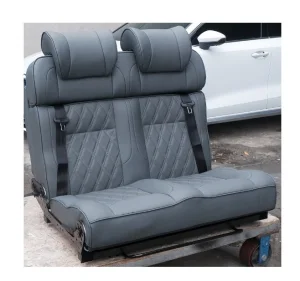
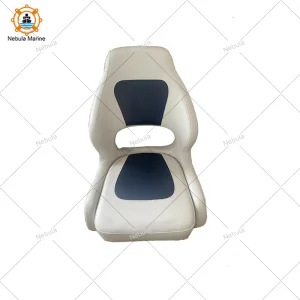
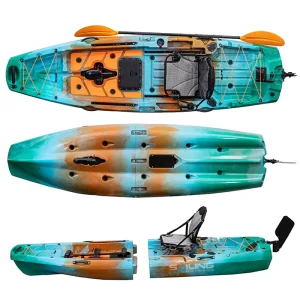
Premium marine components, structural designs, and handheld hydrographic systems deployed globally.
How acoustic telemetry and sonar solutions are reshaping commercial fishing, marine exploration, and recreational navigation.
The global marine electronics market, particularly hydroacoustic sounding and sonar surveying instruments, has observed unprecedented compound growth. Fish finders are no longer luxury recreational add-ons; they are core capital equipment for commercial trawlers, survey vessels, and artisanal fishing fleets globally, serving as structural mechanisms to optimize catch efficiency and ensure route safety.
From single-frequency 50/200 kHz systems to ultra-high-definition CHIRP (Compressed High-Intensity Radiated Pulse), DownScan, and multi-dimensional real-time scanning systems, R&D demands have skyrocketed. OEM developers must navigate complex hydrodynamic challenges, thermal dispersion of piezo-ceramic arrays, and electromagnetic compatibility (EMC) in compact spaces.
Industrial integration of AI algorithms enables real-time bottom classification, biomass calculation, and automatic noise rejection in turbid or high-velocity currents. Sourcing organizations prioritize OEM/ODM factories capable of deploying custom firmware, enabling custom interfaces, and providing robust SDKs for deep vessel integration.

Building a great vessel or marine electronic system comes down to three core fundamentals: time-honoured design, premium materials, and construction standardisation. Our values go far beyond just providing a product for a great price; we are dedicated to redefining B2B value chains.
By bringing together global engineering resources—drawing on German hull designers Klaus Filter and Graeme King, along with the precision execution of the Flying Eagle Boat Company, WinTech Racing, and US-based electronic engineering talents—we have crafted a manufacturing system dedicated to sustainability, affordability, and relentless technological innovation.
Whether you require carbon-fiber reinforced brackets, modular hulls, high-durability electrical routing, or custom-tailored sonar array housings, our collaborative engineering team provides structural assurance and optimized acoustic telemetry integration.
Explore Engineering PartnershipsUnlocking scale, precision, and deep vertical integration for global marine electronics distribution.
From custom piezoelectric crystal manufacturing to localized PCB assembly (PCBA) services, China's marine cluster zones in Zhejiang and Guangdong dramatically decrease turnaround times. Raw component sourcing, waterproofing molds (IPX7 & IPX8), and high-frequency testing equipment are consolidated within tight geographical areas, reducing logistics overhead and lead times.
High-quality OEM manufacturers maintain indoor simulated water pressure chambers, salt-spray chambers, and acoustic calibration tanks to verify beam geometry, signal-to-noise ratio (SNR), and operational longevity. Every batch of transducers undergoes dynamic testing to confirm that the piezoelectric ceramic elements can withstand pressure variables and thermal stresses.
Whether you require customized marine mount setups, private labeling, modified cable lengths, specific connectors (NMEA 2000 compatibility, 8-pin, 9-pin configurations), or dedicated operating system languages, Chinese OEM/ODM factories offer flexible modular design practices that accommodate diverse regional market requirements.
Understanding the technical variations of multi-frequency sonar and computational hardware required for industrial marine applications.
Standard baseline configuration for deep-water penetration and shallow-water definition balance.
Ultra-high detail sonar imaging for photo-like structural visualization and precise object definition.
Guaranteed continuous immersion integrity under operational hydrostatic pressures.
Maximizes signal return intensity from deep-sea geological substrates and target ecosystems.
Transducers perform poorly when subjected to surface turbulence, micro-bubbles, and boundary layer separation. That is where our unique structural partnership shines. Drawing from Klaus Filter and Graeme King's German and Australian hydrodynamic hull design expertise, we develop custom mounting brackets, pocket mounts, and thru-hull fairing blocks that match the hull's fluid dynamic profile. This minimizes drag and keeps cavitation bubbles away from the transducer face, allowing for crystal-clear acoustic tracking even at high cruising speeds.
From freezing polar conditions to shallow tropical channels, marine equipment must be customized to withstand specific localized challenges.
Deploying marine hardware in Northern Europe, Alaska, and Canada requires low-temperature cable preservation (highly flexible polyurethane coatings) and specialized portable transducer brackets. The electronic units must integrate high-contrast displays readable in freezing conditions, along with anti-glare screen treatments optimized for direct snow reflections.
In locations like the Gulf of Mexico or tropical mangrove estuaries, muddy substrates absorb acoustic energy. Fish finders configured for these conditions require high-frequency, wide-angle cone transducers (e.g., 200 kHz or 455 kHz with wider beam angles) and advanced DSP filters to distinguish bottom silt from target fish species resting close to submerged roots.
Deep-sea marine activities require deep penetration transducers (often 50 kHz or CHIRP ranging from 28 to 75 kHz) and high-power transmission modules (1kW to 3kW RMS). The physical installation requires robust thru-hull bronze housings or keel-mounted transducers that can withstand heavy impacts from floating debris and constant high-salinity exposure.
Where the industry is moving—integrating connectivity, automated detection, and sustainable materials.
Modern fleets require wireless data transfer. Fish finders are evolving into integrated navigation systems that upload sonar logs to the cloud. This data helps generate crowd-sourced bathymetric maps, which are crucial for commercial fleet optimization and environmental monitoring.
Real-time active sonar technology has shifted how anglers and commercial operations track targets. B2B buyers now look for ODM partners capable of developing phased-array transducers that display real-time fish movement and structural changes in a 360-degree radius around the boat.
Consistent with our corporate philosophy, manufacturing facilities are focused on reducing hazardous materials in electronics. This includes adopting lead-free piezo-ceramics, using recyclable polymer enclosures, and utilizing biodegradable cable packaging to meet global standards.
For procurement officers and marine hardware distributors setting up long-term OEM partnerships.
Before selecting a Chinese fish finder manufacturer, check the following key factors:
Expert technical answers to common queries regarding marine sonar and hardware manufacturing.
Traditional sonar systems pulse a single frequency (e.g., 200 kHz) at regular intervals. In contrast, CHIRP sonar sweeps a range of frequencies (e.g., from 130 to 210 kHz) in a single pulse. This injects significantly more energy into the water column, resulting in better target separation, improved bottom tracking at high speeds, and clearer display resolution.
Water flow along a boat's hull creates turbulence and micro-bubbles, which can block acoustic signals. Collaborating with hydrodynamic design experts ensures transducers are positioned where water flow is cleanest. Using customized fairing blocks or pocket mounts helps minimize boundary layer separation, allowing the sonar to perform well even at high speeds.
Yes. For marine gear exposed to high salinity or acidic coastal waters, we offer alternative housings. Options include marine-grade bronze, high-grade AISI 316 stainless steel, and specialized composite plastics. These materials resist galvanic corrosion and withstand the physical stresses of long-term deployment.
The process begins with schematic modeling and PCB layout engineering, followed by tooling creation for the waterproof housing. Next, we build prototypes for acoustic tank testing and environmental checks (temperature cycle and vibration). Once verified, we run a small pilot production batch to calibrate the manufacturing line before starting full-scale mass production.
Our systems are built with native support for both NMEA 0183 and NMEA 2000 networks. This allows our units to seamlessly share depth, temperature, GPS coordinate data, and waypoint details with multi-function displays (MFDs) and autopilots from other manufacturers.
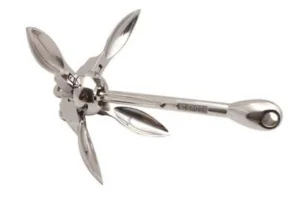
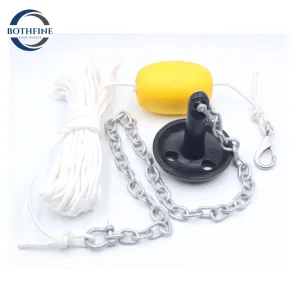
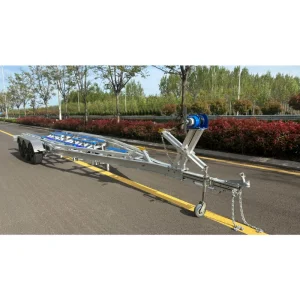
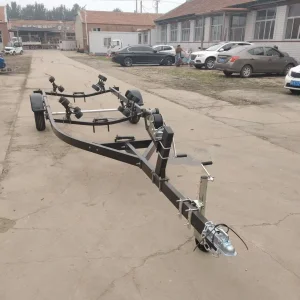
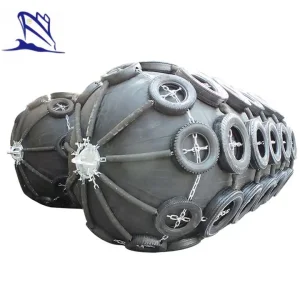
Premium anchors, shock-absorbing seating, high-durability trailers, and bumper accessories built for harsh conditions.
 Green Boat