Proof is in the performance
Building a great boat engine comes down to three core fundamentals: Time-honoured design, premium materials, and construction standardisation.
Value redefined
Our value goes beyond that of just a great product for a great price. In the competitive landscape of Japan's boat engine factory ecosystem, we prioritize reliability above all else.
Your complete rowing and marine resource
We’ll happily come to you if you’d like to try our solutions, provide you with flexible finance and rental options, and comprehensive aftercare and maintenance services to maximise the efficiency and performance of your boats for now and for the future.
Send Inquiry NowJapan has long been recognized as a global powerhouse in marine propulsion technology. As a premier boat engine manufacturer in Japan, the industry thrives on a unique blend of heritage craftsmanship and futuristic automation. From the bustling industrial zones of Nagoya and Hamamatsu to the shipyard clusters in Nagasaki, Japan’s maritime engineering is synonymous with durability. The current commercial climate in Japan focuses heavily on "Carbon Neutrality 2050," a government-led initiative that is pushing factories to innovate beyond traditional internal combustion engines.
Japan hosts some of the world's most advanced marine factories. These facilities utilize "Kaizen" (continuous improvement) to ensure that every outboard and inboard motor meets rigorous international standards like IMO Tier III for NOx emissions.
The status of boat engine production in Japan is currently characterized by a shift toward high-output, low-displacement technology. Manufacturers are increasingly integrating AI-driven monitoring systems that allow ship owners to track fuel consumption and engine health in real-time. This "Smart Marine" trend is not just a luxury but a necessity for the thousands of commercial fishing vessels navigating the Kuroshio Current and the Tsushima Strait.
As we look toward 2030, the Japanese marine industry is pivoting toward alternative fuels. Hybrid-electric engines are becoming commonplace in the Seto Inland Sea, where eco-tourism and passenger ferries demand silent, emission-free operation. Major boat engine factories in Japan are investing billions in hydrogen fuel cell research, aiming to power the next generation of deep-sea cargo ships and luxury yachts. Artificial Intelligence is also playing a critical role, with predictive maintenance algorithms now coming standard in mid-to-high HP marine diesel engines.
Green understands that no single purchase is more important to a rower or rowing organization than buying a racing shell or a reliable boat engine.
By bringing together the resources of the global marketplace in renowned German hull designers Klaus Filter, Graeme King, the Flying Eagle Boat Company, and a group of business, engineering, and rowing talents in the USA, WinTech Racing has created an organization dedicated to innovation, research, and the best price-value relationship in the market place.
The application of marine engines in Japan is incredibly diverse, reflecting the country's varied geography and maritime needs. Understanding these scenarios is key for any boat engine factory looking to serve the Japanese market effectively.
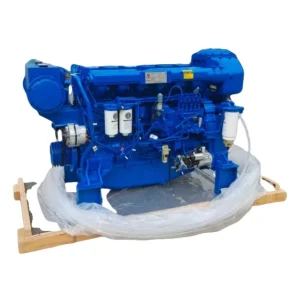
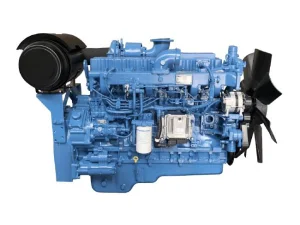
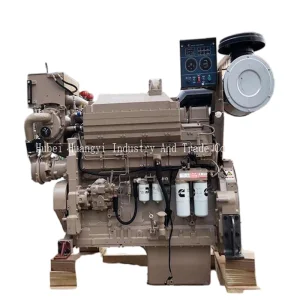
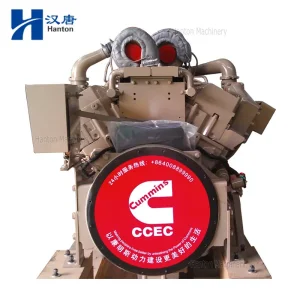
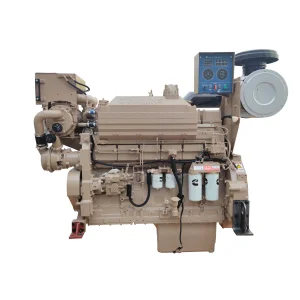
From the cold waters of Hokkaido, famous for crab and scallops, to the tropical reefs of Okinawa, reliable diesel engines are life-and-death equipment. Japanese fishermen require engines that can operate for thousands of hours with minimal maintenance. High-torque, low-RPM engines like the 6-cylinder models are preferred for dragging heavy nets, while high-speed outboards are essential for the skipjack tuna fleets.
The Sea of Japan experiences some of the world's roughest winter conditions. Boat engines used here must feature advanced cooling systems and corrosion-resistant materials to withstand high salinity and freezing temperatures. Factories in Japan prioritize "Cold Start" technology and reinforced gearboxes for ships navigating these demanding routes.
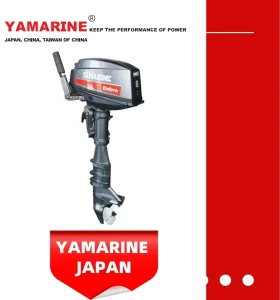
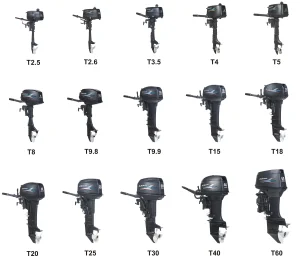
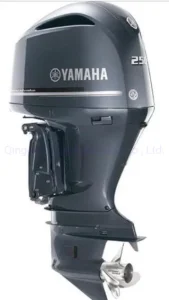
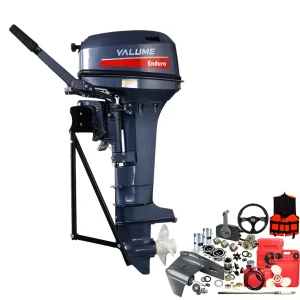
In Tokyo Bay and Osaka Bay, recreational boating is seeing a massive resurgence. Here, the demand is for "Lifestyle Engines"—outboards that are not only powerful but also aesthetically pleasing and incredibly quiet. This is where 2nd and 4th stroke outboard motors (15HP to 350HP) dominate the market, offering the perfect balance of speed for water sports and efficiency for weekend cruising.
Japanese factories utilize "Poka-yoke" (error-proofing) in their assembly lines. Every boat engine undergoes a rigorous dyno-test and salt-spray chamber analysis before it leaves the factory floor, ensuring it can survive a decade in the harsh Pacific environment.
The export market remains a vital pillar for boat engine manufacturers in Japan. While domestic demand is stable, Southeast Asia and North America are hungry for Japanese-engineered marine solutions. This has led to the development of "Global Platforms"—engines that can be easily serviced anywhere in the world with standardized parts. Furthermore, the integration of IoT (Internet of Things) allows Japanese technicians to remotely diagnose an engine located in a vessel in the Indian Ocean, showcasing the true "AI-Tech" edge of modern Japanese manufacturing.
Green is your complete rowing resource. We also offer coaching launches and trailers, oars, a full inventory of spare parts, as well as a comprehensive line of accessories, tools, and equipment.
View all racing boats
As the leading boat engine factory in Japan, our commitment to quality is unwavering. We utilize the most advanced manufacturing processes to ensure that every engine is built to last. Our team of expert engineers is constantly pushing the boundaries of what's possible in marine propulsion.
Contact Our Factory Now Green Boat