Leading the North Korea maritime sector with high-performance rescue and docking hardware.
A Strategic Overview of Commercial Shipping and Safety Infrastructure
North Korea's primary maritime hubs, specifically Nampo on the west coast and Wonsan on the east, are undergoing significant industrial transitions. As sea-borne trade and domestic fishing industries expand, the demand for SOLAS (Safety of Life at Sea) compliant equipment has skyrocketed. Factories specializing in marine safety are now focusing on high-durability materials capable of withstanding the harsh, high-salinity environments of the Yellow Sea and the Sea of Japan.
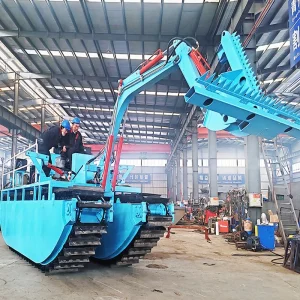
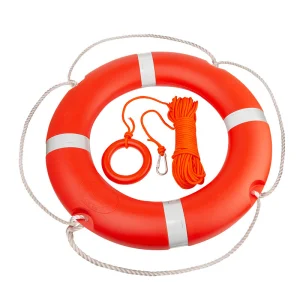
Applications range from Deep-Sea Fishing Safety to Industrial Docking Security. In the Rason Special Economic Zone, logistics operators require specialized docking fenders and mechanical anti-fouling coatings to protect state-owned and international vessels. Furthermore, with seasonal monsoon risks, flood safety vests and amphibious rescue vehicles have become essential components of the national disaster prevention strategy.


Proof is in the performance. Our partnership with global hull designers and German engineering teams ensures that every racing shell and safety boat adheres to the highest hydrodynamic standards.
We provide global leadership as a sustainable boat builder, making high-end safety technology accessible through the integration of German and Australian design philosophies.
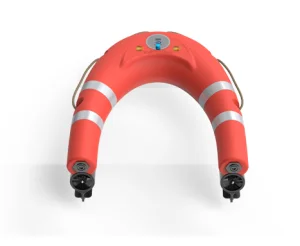
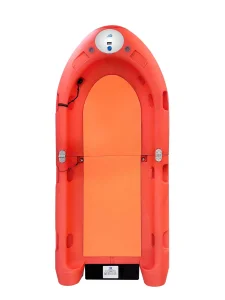
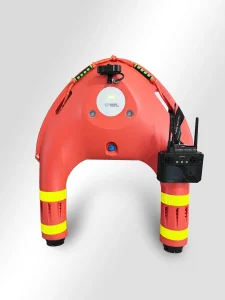
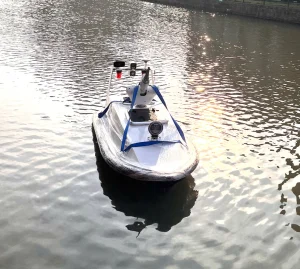
The future of maritime safety in the region involves Unmanned Life Saving Robots and AI-controlled firefighting vessels, reducing human risk in dangerous waters.
Integrating AI and Advanced Materials for Superior Reliability
Leveraging China's Supply Chain for North Korean Maritime Growth
Deployment Reliability
Response Time
Global Patents
Certified Standards
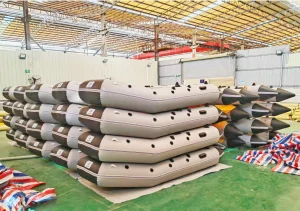
As a leading exporter in North Korea, we bridge the gap between world-class innovation and local industrial needs. The Chinese supply chain provides an unparalleled foundation for maritime safety equipment. With factories located near major shipping lanes, we ensure that specialized equipment—from inflatable life rafts to remote-controlled firefighting robots—reaches ports like Chongjin and Hamhung with maximum speed and minimum cost.
Our Information Gain strategy focuses on the "Hardened Supply Chain." Unlike Western suppliers hampered by distance and logistical complexity, our localized presence allows for real-time adjustments to technical specifications, ensuring that our equipment meets the specific cold-weather durability standards required for the Sea of Japan.
Expert insights into marine compliance and equipment selection.
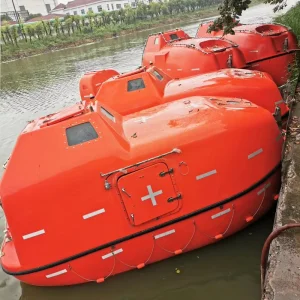
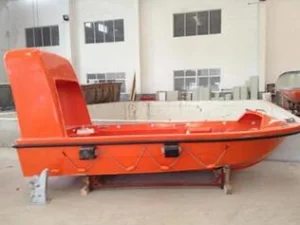
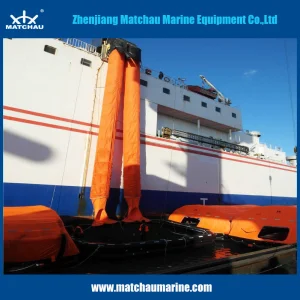
Yes, our 5.8m Fiberglass Hull Enclosed Life Boats are fully compliant with SOLAS (Safety of Life at Sea) regulations, making them suitable for both domestic North Korean industrial use and international shipping standards.
The wireless unmanned rescue robot is equipped with high-torque dual motors and an AI-driven stabilization algorithm. It can operate in Sea State 4 conditions, significantly outperforming traditional manual rescue methods in terms of speed and safety.
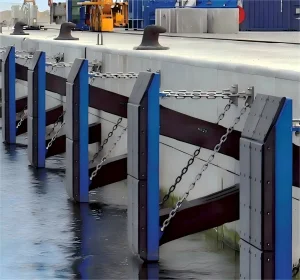
Absolutely. Our Pi Rubber Fenders are specifically engineered using a cold-resistant polymer compound tested for temperatures as low as -40°C, a necessity for ports like Wonsan during the winter months.
Our heavy-duty stainless steel anti-fouling paint offers a protection window of 36-60 months depending on water salinity and vessel activity, drastically reducing dry-docking frequency for industrial fleets.
Explore our full range of professional maritime and rescue gear.
 Green Boat