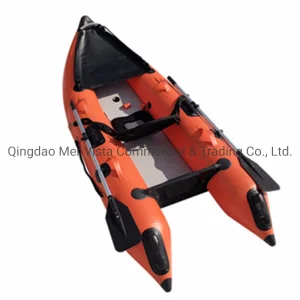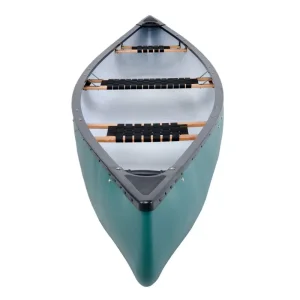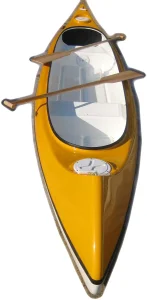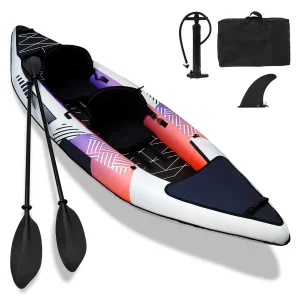
Equatorial Guinea's geographical dichotomy, split between the insular region of Bioko Island and Annobón and the continental mainland of Río Muni, places an exceptional demand on maritime transport systems. Historically dependent on traditional wooden cayucos, the region's artisanal fisheries, coastal shipping corridors, and riverine networks are undergoing a massive transition. High-durability fiber-reinforced plastics (FRP) and drop-stitch PVC polymers are fast replacing organic structures. Traditional timber crafts struggle to cope with the extreme humidity, marine wood-boring organisms, and relentless equatorial UV indices characteristic of the Gulf of Guinea.
As a leading global exporter of performance marine hulls, we provide structural answers designed to withstand these challenges. The coastal waters of Malabo, Luba, Bata, and Cogo present highly dynamic wave environments where hydrodynamic efficiency determines not only fuel consumption rates for motorized outboards but the physical safety of local operators. Our focus centers on supplying structural equipment engineered to navigate shallow river deltas and open coastal breaks. These crafts deliver high payload-to-weight ratios, operational longevity, and resistance to environmental stress.
To support this transition, our engineering roadmap integrates global hydrodynamic research with direct field data from West African operations. By matching local maritime applications—ranging from offshore fisheries monitoring to deltaic cargo transport—with advanced materials, we establish high operational benchmarks. We build products designed to excel in extreme conditions, ensuring that fishing cooperatives and industrial enterprises in Malabo and Bata secure reliable, long-term tools for economic growth.

Building a great boat comes down to three core fundamentals: Time-honored design, premium materials, and strict construction standardization. Green understands that no single purchase is more critical to a commercial operator, rowing organization, or maritime coordinator than investing in a high-grade vessel.
By bringing together global resources—including renowned German hull designers Klaus Filter, Graeme King, the Flying Eagle Boat Company, and leading US engineering talents—WinTech Racing and Green have created an organization dedicated to delivering top-tier hydrodynamic speed, mechanical stability, and manufacturing scale.
"The mission of Green is to establish our global leadership as the foremost sustainable boat builder, dedicated to expanding the reach of the sport and water transport by making it accessible to all through the integration of cutting-edge technology and the use of the highest quality materials. Drawing on the combined expertise of US engineering and German and Australian design, we craft exceptional racing and commercial shells that set new standards for performance and durability."
Our commitment goes beyond traditional manufacturing. We offer flexible import and supply configurations to match the financial realities of regional distributors within the CEMAC zone. From initial custom hull sizing and rotomolding design to localized maintenance programs, we ensure that every hull deployed provides reliable, long-term service under demanding marine conditions.
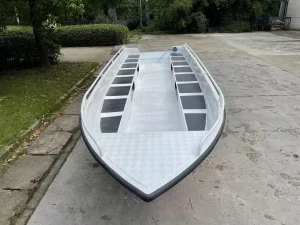
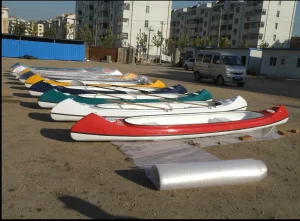
Along the Benito River (Río Woleu) and the Muni Estuary, shallow sandbars and dense mangrove root systems restrict the draft of standard commercial vessels. Our flat-bottomed and low-draft PVC and FRP canoes navigate these narrow channels easily. They transport consumer goods, agricultural products, and light equipment safely to rural settlements where roads do not exist.
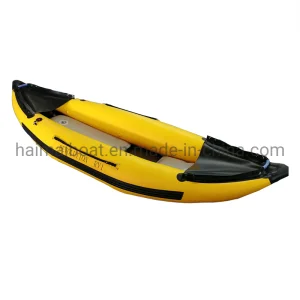
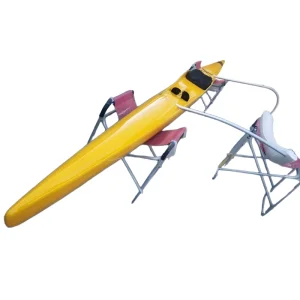
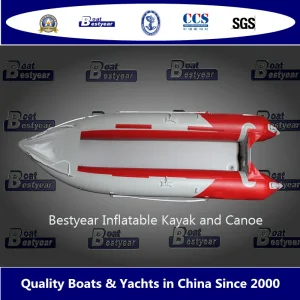
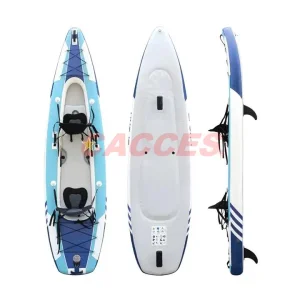
Equatorial Guinea's Ministry of Fisheries and Water Resources is actively working to modernize artisanal fishing. By supplying high-stability drop-stitch kayaks and rigid outrigger canoes, we enable local cooperatives in Luba, Annobón, and Corisco Bay to fish safely in deeper waters. These modernized vessels are far more stable than traditional wooden structures, helping to increase daily catch sizes.
The offshore oil fields of Malabo require lightweight, rapid-deployment crafts to support emergency response drills and site-security operations. Our FRP Fast Speed Rescue Boats and rigid inflatable canoes serve as dependable utility tenders. Designed for rapid launching, they are capable of operating reliably in high-salinity zones near drilling platforms.
Choosing the right hull material directly impacts the service life, cargo capacity, and overall safety of a canoe. Below, we compare the performance and physical characteristics of different composite materials when operated in tropical coastal environments.
| Material Category | Tensile Strength & Construction | UV Degredation Resistance | Primary Application Sector | Maintenance Profile |
|---|---|---|---|---|
| Heytex PVC (Drop-Stitch) | Dual-wall 1000 Denier Polyester base with high-density fibers | Excellent (UV-inhibited polymer coating) | Artisanal shallow-water fishing and portable rapid deployment | Minimal. Highly resistant to punctures and simple to patch. |
| Fiberglass Reinforced Polymer (FRP) | Multi-axial glass fibers embedded in high-grade marine resins | Outstanding (Finished with a marine gelcoat layer) | Industrial harbor search-and-rescue, high-speed coastal transport | Low. Structural repairs are easily handled using localized resin casting. |
| Rotomolded Polyethylene (PE) | Monolithic single-walled polymer shell | Superior (Formulated with UV-8 stabilizers) | Estuary transport and rough river cargo carriage | Zero. Exceptional impact resistance prevents cracking on rocks and sand. |
| Marine Grade Aluminum | Premium structural alloy templates | Immune to UV damage | Rotomolding mold bases and heavy-duty utility vessels | Extremely low. Highly resistant to impact and structural deformation. |
As a key manufacturing partner for maritime organizations worldwide, our factory floor leverages advanced automation to ensure structural consistency and cost-efficiency. Our rotomolding plants use computer-controlled thermal cycles to produce single-piece, stress-free polyethylene hulls. These hulls feature uniform wall thicknesses, preventing the thin corners that often lead to failure in hand-formed alternatives.
By sourcing raw materials—such as premium Heytex PVC and marine-grade resins—directly from leading global chemical producers, we insulate our supply chain from price volatility. This integration enables us to offer competitive, direct-factory pricing to buyers in Equatorial Guinea, bypassing intermediate distribution markups.
For logistics, we coordinate container loading at major ports like Ningbo and Shanghai. Our teams design custom packing layouts, nesting rigid hulls and vacuum-packing inflatable models to maximize container space. This optimization lowers ocean freight costs for delivery to the K5 Freeport in Malabo and the Port of Bata, ensuring efficient transit and reliable delivery schedules.

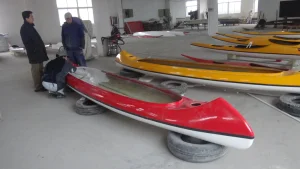
German hydrodynamic styling coupled with automated production lines, ready for export to West African port cities.
The modernization of Equatorial Guinea's watercraft fleet is closely linked to international maritime standards and developments in material science. Traditional dugout canoes face increasing timber shortages, combined with rising concerns over forestry preservation. As a result, our long-term product roadmap focuses on introducing sustainable, high-performance materials designed for tropical marine environments.
Phase 1: Bio-Composite Integration and Eco-Resins
We are researching natural fiber reinforcements, such as flax and hemp, combined with bio-derived epoxy resins. These materials aim to match the strength of standard fiberglass while reducing the manufacturing carbon footprint. This alignment supports local environmental goals and protects vulnerable coastal ecosystems, like the Corisco Bay reserves.
Phase 2: Hybrid Propulsion and Solar Integration
To address high fuel costs in remote regions of Río Muni, we are designing hulls optimized for low-horsepower electric outboards. These systems can interface with modular solar charging setups on shore, offering a reliable alternative to gasoline imports and lowering daily operating costs for remote communities.
Phase 3: Digital Mapping and Fishing Sonar Enclosures
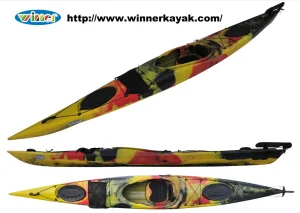
Future iterations of our rotomolded and FRP fishing canoes will feature integrated transducer mounts and waterproof compartments for navigation equipment. This addition will enable local fishers to utilize sonar and GPS tools safely, helping them locate fish stocks efficiently and navigate the open waters of the Gulf of Guinea with greater security.
Importing commercial and rescue watercraft into Equatorial Guinea requires alignment with the trade guidelines established by the Central African Economic and Monetary Community (CEMAC). Our logistics and engineering divisions work closely to ensure all documentation, manufacturing standards, and equipment configurations meet these requirements.
Contact our marine engineering division today to discuss custom molding requirements, freight pricing to Equatorial Guinea, and bulk fleet solutions.
 Green Boat